By CP Home Service
⚡ The electrical system is one of the most important systems in any home.
Most homeowners interact with electricity every day without giving it much thought. Flip a switch, plug in a device, charge a phone—it all seems simple.
But behind the walls, electrical systems can develop issues that affect safety, reliability, and even the value of a home.
During a home inspection, electrical concerns are among the most common findings we identify.
The good news? Many issues can be corrected once they’re discovered.
🔍 What does a home inspector look for?
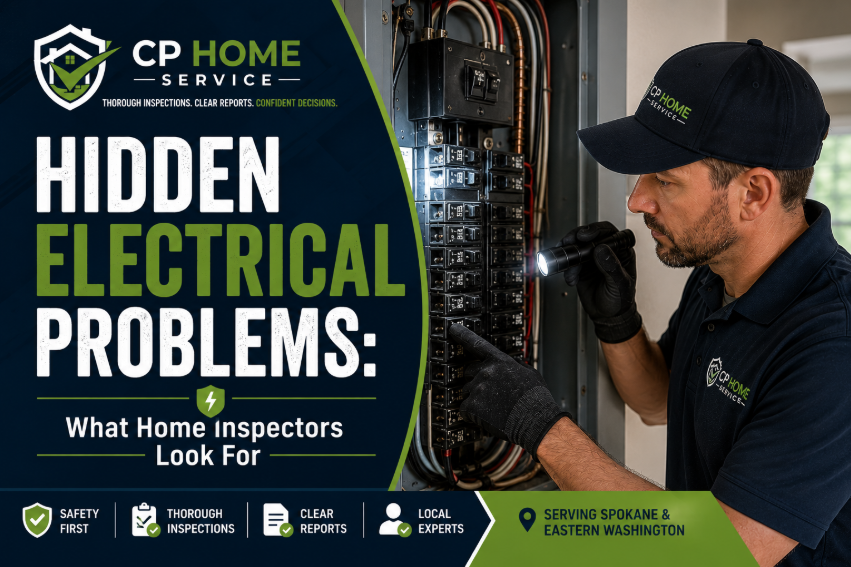
A home inspection is a visual examination of readily accessible electrical components and systems.
This typically includes:
- Service entrance conductors
- Electrical panel(s)
- Branch circuit wiring
- Receptacles and switches
- Grounding and bonding components
- Visible wiring in attics, basements, and crawlspaces
- Exterior electrical equipment
The goal is to identify visible deficiencies, safety concerns, and conditions that may warrant further evaluation.
⚠️ Common electrical issues found during inspections
1. Double-Tapped Breakers
A double tap occurs when two conductors are connected to a breaker designed for only one.
While some breakers are listed for multiple conductors, many are not.
Improper connections can lead to overheating and poor electrical performance.
2. Missing Knockout Covers
Electrical panels should have all openings properly covered.
Missing knockout covers leave energized components exposed and can allow debris, moisture, or pests to enter the panel.
3. Improper Wiring Connections
Homeowners and previous contractors sometimes perform electrical modifications that don’t meet modern standards.
Examples include:
- Open splices
- Unsupported wiring
- Improper junction boxes
- Unprotected cables
These conditions may create safety concerns and often require further evaluation.
4. Reversed Polarity
A receptacle may appear to work normally while being wired incorrectly.
Reversed polarity can increase shock hazards and may affect sensitive electronics.
Inspectors use specialized testers to identify these issues.
5. Missing GFCI Protection
Ground-Fault Circuit Interrupter (GFCI) protection is intended to reduce the risk of electrical shock in locations where water may be present.
Common locations include:
- Bathrooms
- Kitchens
- Garages
- Exterior receptacles
- Crawlspaces
Missing or inoperative GFCI protection is a common inspection finding.
6. Overheated Components
Inspectors often look for signs of overheating such as:
- Discoloration
- Scorch marks
- Melted insulation
- Burnt odors
These conditions may indicate excessive load, loose connections, or other electrical deficiencies.
🏠 Why electrical issues matter
Electrical deficiencies don’t always cause immediate problems.
In many cases, a system may continue operating while hidden issues develop over time.
Potential concerns include:
- Fire hazards
- Shock hazards
- Equipment damage
- Reliability issues
- Costly repairs after purchase
Identifying concerns before a real estate transaction helps buyers make informed decisions.
🔎 What a home inspection can—and can’t—do
A home inspection is not a code compliance inspection.
It is also not technically exhaustive.
Instead, the inspection provides a snapshot of the home’s visible and readily accessible systems at the time of the inspection.
When concerns are identified, additional evaluation by a qualified electrical contractor may be recommended.
💡 Simple electrical safety tips for homeowners
Consider these quick checks:
Monthly
- Test GFCI receptacles
- Check for warm outlets or switches
- Replace damaged cover plates
Annually
- Look for signs of rodent activity around wiring
- Inspect visible wiring for damage
- Ensure electrical panels remain accessible
Anytime
- Have unusual electrical behavior evaluated promptly
Examples include:
- Flickering lights
- Frequently tripped breakers
- Burning odors
- Sparking outlets
📍 Electrical inspections in Eastern Washington
Homes throughout Spokane and Eastern Washington range from newer construction to homes built many decades ago.
Different eras of construction can present different electrical considerations.
A professional home inspection helps identify visible concerns and provides valuable information about the condition of a home’s electrical system.
✅ Final Thoughts
Electrical systems are easy to take for granted—until something goes wrong.
A thorough home inspection can help identify visible deficiencies, safety concerns, and maintenance issues before they become larger problems.
Whether you’re buying, selling, or simply want a better understanding of your home, knowing the condition of the electrical system is an important part of protecting your investment.
Ready to Learn More About Your Home?
CP Home Service provides professional home inspections throughout Spokane and Eastern Washington with detailed reporting and clear explanations to help you make informed decisions.
Book you inspection today or Contact us for more information. We’re here to help!