By CP Home Service
🏠 Out of Sight Doesn’t Mean Unimportant
When most people think about a home inspection, they picture an inspector examining the roof, testing outlets, or walking through the living room.
What many don’t realize is that some of the most valuable information about a home’s condition can be found in a place few homeowners visit: the attic.
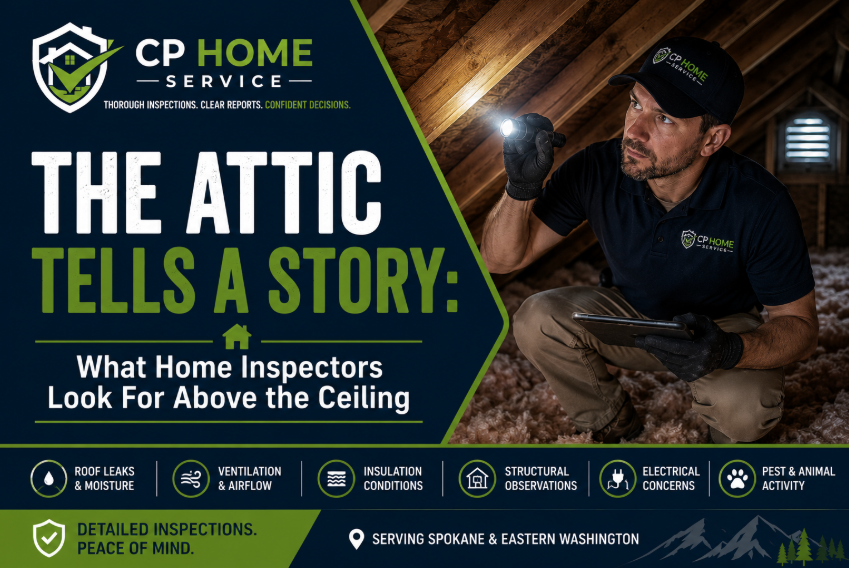
An attic often tells the story of how a home has performed over time. Signs of moisture intrusion, ventilation issues, structural concerns, and insulation deficiencies are frequently visible long before they become obvious inside the living space.
That’s why attic inspections are an important part of a comprehensive home inspection whenever safe access is available.
🔍 Why Inspect the Attic?
The attic sits at the intersection of several critical home systems:
- Roofing
- Structural framing
- Ventilation
- Insulation
- Moisture management
Problems in any of these areas can affect comfort, energy efficiency, durability, and long-term maintenance costs.
🌧 Signs of Roof Leaks
One of the most common reasons inspectors enter an attic is to look for evidence of past or present moisture intrusion.
Potential indicators include:
- Water staining on sheathing
- Discolored framing members
- Damp insulation
- Mold-like growth
- Active dripping during wet weather
Sometimes a roof may appear acceptable from the exterior while hidden signs of leakage are visible from underneath.
💨 Ventilation Matters More Than Most People Realize
Proper attic ventilation helps regulate temperature and moisture levels throughout the year.
Inadequate ventilation can contribute to:
- Excessive attic heat
- Moisture accumulation
- Premature roof aging
- Condensation during colder months
Inspectors look for ventilation components such as:
- Ridge vents
- Soffit vents
- Gable vents
- Roof vents
The goal is not simply to confirm vents exist, but to evaluate whether the attic appears to be ventilating effectively.
🧊 Insulation Deficiencies
Insulation plays a major role in energy efficiency and indoor comfort.
During an attic inspection, inspectors may observe:
- Thin insulation coverage
- Uneven distribution
- Compressed insulation
- Missing insulation areas
Insulation deficiencies can contribute to higher heating and cooling costs and may reduce overall comfort inside the home.
🪵 Structural Observations
Attics also provide an opportunity to view portions of the home’s structural framing.
Inspectors may observe:
- Roof trusses
- Rafters
- Collar ties
- Framing modifications
- Visible damage
While home inspections are not engineering evaluations, visible structural concerns may warrant additional review by a qualified professional.
🐿 Unwanted Guests
Animals often find attics appealing.
Inspectors occasionally discover evidence of:
- Rodents
- Birds
- Bats
- Insects
Signs may include nesting materials, droppings, damaged insulation, or visible entry points.
Early detection can help prevent additional damage and contamination.
⚡ Electrical Concerns in Attics
Attics frequently contain electrical wiring and junction boxes.
Common observations may include:
- Unsupported wiring
- Open junction boxes
- Improper wiring modifications
- Damaged cable insulation
Electrical concerns found in attics can sometimes present safety hazards and may require further evaluation.
🏠 What Homeowners Can Watch For
Although most homeowners don’t regularly enter their attic, a few warning signs may indicate an issue above the ceiling:
- New ceiling stains
- Musty odors
- Increased energy bills
- Uneven room temperatures
- Moisture around attic access hatches
These symptoms don’t always mean a major problem exists, but they may justify further investigation.
🔎 What a Home Inspection Can and Can’t Do
Home inspectors evaluate readily accessible attic areas when safe conditions exist.
However, inspectors generally do not:
- Move stored belongings
- Walk on unsafe surfaces
- Enter areas with inadequate clearance
- Perform destructive testing
The inspection is a visual assessment of conditions present at the time of the inspection.
📍 Attic Conditions in Eastern Washington
Eastern Washington homes experience significant seasonal temperature swings.
Hot summers, cold winters, and snow loads can all affect attic performance over time.
Proper ventilation, insulation, and moisture management become especially important in our climate.
A professional home inspection can help identify visible concerns before they become larger issues.
✅ Final Thoughts
The attic may not be the most frequently visited part of a home, but it often provides valuable clues about the condition of the property.
From roof leaks and ventilation concerns to insulation deficiencies and electrical issues, what happens above the ceiling can have a significant impact on the home below.
A thorough home inspection helps uncover these hidden conditions and provides homeowners and buyers with information they can use to make informed decisions.
Ready to Learn More About a Home’s Condition?
CP Home Service provides professional home inspections throughout Spokane and Eastern Washington with detailed reporting, clear explanations, and a commitment to helping clients understand the homes they own or plan to purchase.
Book your Home Inspection Online today, or Contact us for more information. We’re here to help!